
Every energy-efficient home build eventually runs into the same argument. One camp insists the glass is everything; after all, it's 80% of the window, so surely that's where the money should go. The other camp swears by the frame, pointing to drafty edges and hot-to-touch metal as proof that the glass alone was never the whole story.
Both sides have a point. And that's exactly the problem with picking a side.
The truth is, this isn't really a competition; it's a partnership, and treating it like a choice between one or the other is how homeowners end up disappointed with their electricity bills despite spending big on "premium" windows. To actually build a home that stays cool in summer and warm in winter, you need to understand what each component is doing on its own and where aluminium and uPVC windows each earn their place in that equation.
The Anatomy of a Window: Breaking Down the Surface Area
At first glance, the answer seems obvious. In a standard window, glass accounts for roughly 80% of the total surface area, while the frame occupies the remaining 20%. Based on sheer math, it is easy to conclude that the glass dictates the lion's share of your home's energy efficiency.
Glass lets in natural light and radiant heat. In winter, you want glass that captures the sun's warmth and retains indoor heat. In summer, you want glass that reflects harsh infrared rays and blocks thermal transfer. To achieve this, the industry relies on innovations like double or triple glazing, gas-filled chambers, and microscopic Low-E (low-emissivity) coatings.
If your glass is poorly insulated, heat will easily pour through it, rendering your air conditioning or heating systems inefficient. But focusing exclusively on the glass ignores the critical anchor holding it all together: the frame.
Why the Frame Is the Silent Vulnerability
Even the most advanced, triple-glazed glass pane will underperform if it is paired with a weak, highly conductive frame. The frame forms the perimeter of your building envelope, sitting directly against exterior masonry or timber walls.
Historically, metal frames, particularly standard, uninsulated aluminium, acted like thermal highways. When the sun baked the exterior frame, heat raced straight through the metal by conduction, warming up the indoor edge and leaking heat into the room. This thermal bridging made metal windows notorious for energy loss.
However, material science has evolved dramatically. Today, high-performance aluminium windows utilize thermal breaksinsulating barriers placed right through the center of the metal profile that stop heat dead in its tracks. Combined with slim, robust profiles, modern aluminium framing delivers exceptional structural integrity and airtight thermal sealing.
Contender Two: The uPVC Advantage
On the other side of the debate stands uPVC windows. Unplasticized polyvinyl chloride is a rigid, non-conductive polymer that has been a staple in residential construction for decades.
Because uPVC is naturally non-conductive, it does not easily transfer heat or cold. Multi-chambered uPVC profiles trap air within the frame itself, creating a natural insulating barrier. For homeowners prioritizing baseline thermal insulation without necessarily wanting industrial-slim metal aesthetics, uPVC offers a reliable, low-maintenance, and cost-effective solution.
However, because uPVC lacks the extreme structural strength of metal, its frames must be thicker and bulkier to support large glass panes. This reduces the overall glass surface area and limits how expansive your architectural views can be.
The Verdict: Glass and Frame Work as a Team
So, which affects energy efficiency more? The truth is, neither works in isolation. Energy efficiency is a system, not a single component.
- The Glass Controls Radiation: It dictates how much sunlight and radiant heat enter or escape your home.
- The Frame Controls Conduction and Air Leakage: It determines whether heat can bypass the glass entirely through the edges and whether drafts can seep through the joints.
If you install state-of-the-art triple-glazed Low-E glass into a cheap, uninsulated frame, your energy efficiency plummets because heat will leak right through the perimeter. Conversely, if you have a perfectly insulated frame holding single-pane, uncoated glass, your room will still act like a greenhouse.
Making the Right Choice for Your Home
When deciding between aluminium windows and uPVC windows, consider your regional climate and architectural goals:
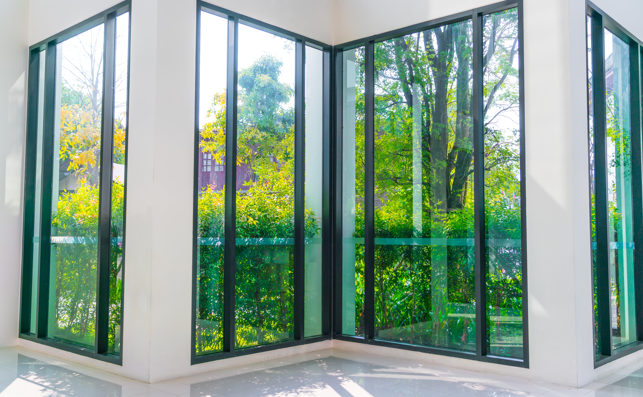
- If you want massive floor-to-ceiling glass walls, ultra-slim sightlines, and contemporary architectural elegance supported by thermally broken metal engineering, modern aluminium is unmatched.
- If your priority is straightforward, cost-effective thermal insulation with traditional box-frame aesthetics, uPVC remains a strong contender.
Ultimately, achieving a truly energy-efficient home requires looking at the big picture. Top-quality Window and Door Systems from Window Magic pair high-performance glass with a thermally optimized frame, to protect your living space from outdoor temperature extremes, lower your utility bills, and ensure year-round comfort.