
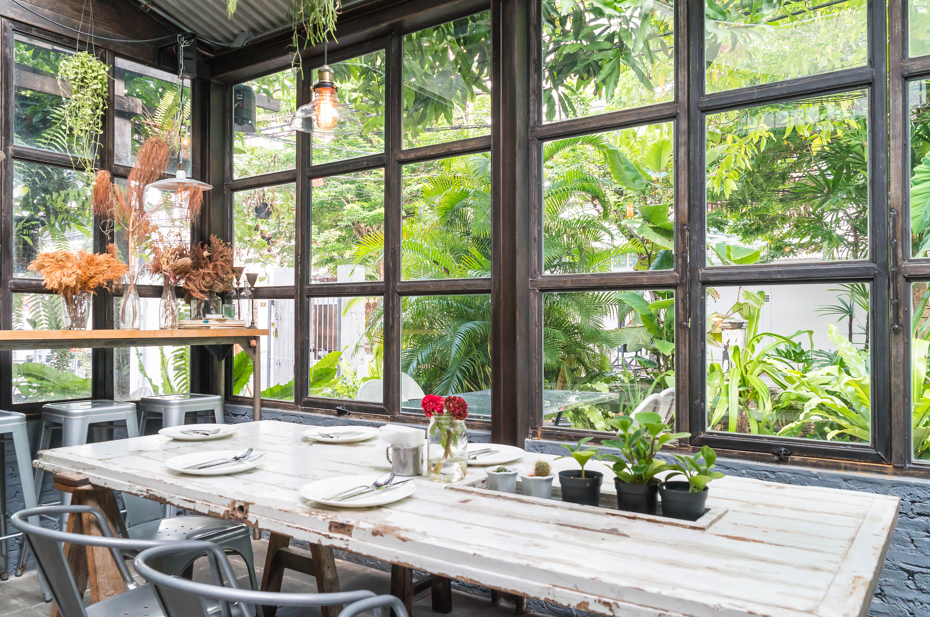
Luxury homes often feel spacious before you even notice their actual size. The effect comes from light, sightlines, ceiling height, fewer visual breaks and a stronger connection with the outdoors. A well-planned 2,000 sq ft home can feel more generous than a poorly planned 3,500 sq ft home.
One of the most effective tools in this equation is the window. Modern corner window design, large fixed glazing and slim aluminium windows can make rooms feel wider, taller and more open. Corner windows bring daylight from two directions and create broad views, which can visually expand a room.
Space Starts With What You See
A room feels limited when the eye stops at a wall. It feels larger when the view continues beyond it.
This is why windows are powerful design elements. They create visual depth. A garden, balcony, skyline or courtyard becomes part of the room’s composition. Even a small living room can feel open when it looks out towards a green view.
The view does not need to be dramatic. A well-designed landscape, a tree, a water feature or even a quiet terrace can add depth. What matters is that the window frames something worth looking at.
Luxury homes are often designed around this idea. The sofa faces the garden. The dining table looks towards a courtyard. The bedroom opens towards a balcony. The home feels larger because the eye travels beyond the four walls.
Corner Windows Change Perspective
A corner is usually a solid, heavy part of a room. Replacing that solid corner with glass changes the experience of the space.
A modern corner window design uses glass across two connected walls. It lets daylight enter from more than one direction. It also reduces the visual weight of the corner.
This makes a room feel lighter.
Corner window design works especially well in living rooms, dining areas, studies and bedrooms with good external views. It can create a panoramic effect without needing a very large room. Corner windows are known to improve daylight, offer wider views and create a stronger sense of indoor-outdoor continuity.
There are two common approaches:
- Framed corner windows: A slim vertical mullion or corner post joins the two glass panels. This is practical and works with many window systems.
- Glass-to-glass corner windows: The glass panels meet with minimal visible framing. This gives a cleaner, more seamless view but needs careful engineering and installation.
Aluminium windows are often suitable for these designs. Aluminium can support slim frames and larger glazed areas while maintaining a crisp, contemporary look. It is also resistant to corrosion, which makes it useful for exterior applications.
Light Makes Rooms Feel Bigger
Natural light is one of the simplest ways to improve the feeling of space.
Dark corners make rooms look smaller. Daylight softens edges and shows the full depth of a room. When light enters from two directions, the effect becomes even stronger.
Corner windows are useful because they capture changing daylight through the day. One side may receive morning light. The other may bring softer ambient light later. This makes the room feel alive and layered.
However, more glass is not always better. A west-facing corner window can bring harsh afternoon heat. A room that is too bright can feel uncomfortable rather than luxurious.
The answer is balance.
Use solar-control glass where needed. Add deep overhangs, vertical fins, curtains or external screens. Plan the furniture so television and work screens do not face direct glare. A luxury home should feel calm at 3 pm, not just look impressive at 10 am.
Use Fewer Visual Interruptions
A cluttered room feels smaller. This is not only about furniture. It is also about lines, frames and surfaces.
Luxury interiors often use fewer but better-defined elements. Large-format flooring. Concealed storage. Clean ceiling lines. Slim window frames. Carefully placed lighting.
Aluminium windows can support this approach. Their slim profiles allow more glass and reduce the visible frame around a view. The result is a cleaner connection between the room and the outdoors.
Fixed windows are particularly effective here. They do not need handles, shutters or opening mechanisms. They can create a wide, uninterrupted view and make the outside feel like framed artwork.
A fixed window is ideal where ventilation is not required. It can be paired with an operable window nearby. This gives the room both a clear view and practical airflow.
Make the Ceiling Work Harder
Ceiling height has a strong effect on how a room feels. A higher ceiling gives the eye more vertical space to travel. It can make a room feel more relaxed, open and formal.
But height alone is not enough.
A room with a tall ceiling and small, low windows can feel disconnected. The upper part of the wall becomes dark and unused. The room may feel tall, but not necessarily spacious.
The best luxury homes connect ceiling height with window height. Tall windows pull the eye upwards. They make the full height of the room visible. They also bring more daylight deeper into the interior.
A full-height fixed window beside a double-height staircase can create drama. A tall window in a living room can make a standard-sized room feel more generous. An arch window design can add vertical emphasis while bringing character to a plain wall.
Create Layers Between Indoors and Outdoors
Luxury is often about transition.
A living room should not end abruptly at a glass wall. It should gradually move towards an outdoor space. A rug may lead to a seating area. A wide sliding door may open to a deck. A pergola may create shade. Plants may soften the edge between the home and garden.
This layered design adds visual depth.
For example, a corner window can look out to a narrow landscaped strip. The room may not be very large, but the outdoor planting creates another layer beyond the glass. The eye sees greenery, texture and depth. The home feels more expansive.
Balconies also work this way. A well-designed balcony can become an outdoor room. Add comfortable seating, plants, lighting and shade. It becomes part of the home rather than a leftover external space.
Think About Proportion
Luxury homes feel balanced because their elements are in proportion.
A very small window on a large wall can make the wall look heavy. A very wide window in a compact room can make the room feel open. But it must be placed correctly.
The width of the window should suit the width of the room. The sill height should suit the furniture layout. The top of the window should relate to the ceiling line.
For example, a living room with a low sofa can take a lower sill height. This keeps the view visible while seated. A bedroom may need a slightly higher sill for privacy. A study may need controlled daylight that does not create screen glare.
It is these decisions that create a premium feel.
Plan the Technical Details
Corner glazing needs more than good design. It needs proper planning.
The structure must support the opening. The window junction must be waterproof. The glass must be chosen for safety, thermal comfort and sound control. Large glass panels may require toughened or laminated glass, depending on size and location.
The corner detail is especially important. It should prevent water seepage during heavy rain. It should also manage expansion and contraction caused by heat. Poor detailing can lead to leaks, rattling frames and long-term maintenance issues.
Window Magic can help homeowners explore aluminium windows, fixed glazing and modern corner window design that suits the architecture of the home. A well-designed window should look effortless. Behind that clean look, there should be careful planning.
Luxury is not only about having more space. It is about making every square foot feel open, calm and considered.