
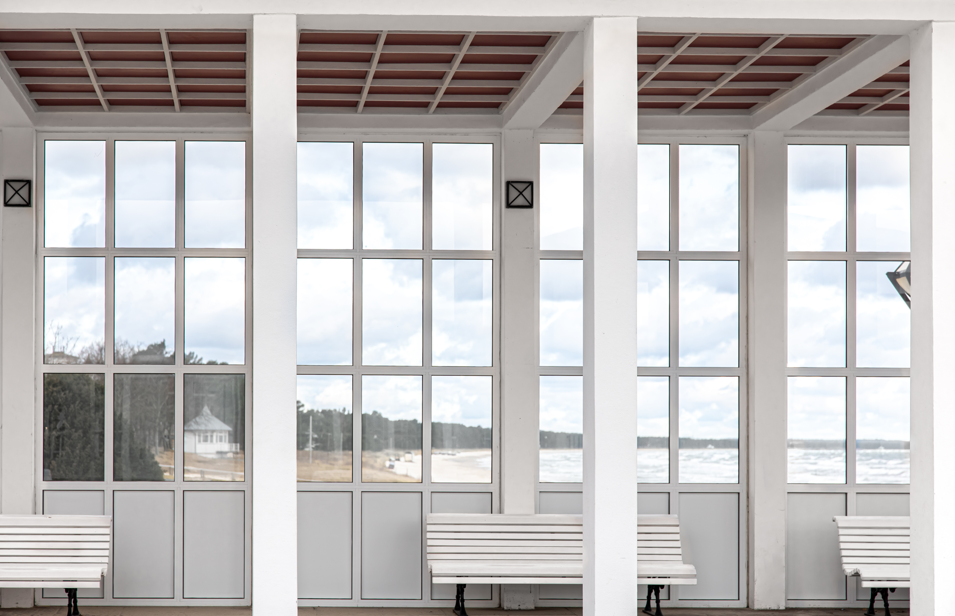
Often we tend to put the windows post designing our interiors, including the ceiling. The ceiling defines the vertical volume of a room. The window decides how much of that volume is visible, bright and connected to the outdoors. When both work together, a home feels balanced and naturally lit.
This is especially important when creating window design in India, where homes must manage intense sun, heat, privacy, dust, monsoon rain and close neighbouring buildings. The goal is not simply to make windows bigger. It is to make them work better.
Understand the Three Heights
Every window has three important levels:
- Sill height: The distance between the finished floor and the bottom of the window.
- Head height: The distance between the finished floor and the top of the window.
- Ceiling height: The clear vertical distance between the floor and the ceiling.
These levels affect light, privacy, furniture and the way a room feels.
A low sill brings the view closer to the floor. It works well in living rooms, bedrooms and areas facing a garden. A high sill offers more privacy and leaves room below for furniture. It is often useful in bedrooms, kitchens and bathrooms.
The window head height is equally important. Taller windows allow daylight to reach further into a room. A common daylighting rule of thumb is that side-window daylight can reach roughly 2 to 2.5 times the window head height into a room.
This means a tall window can brighten more of the room than a short, wide one.
Tall Windows Make Ceilings Feel Higher
A window that stops far below the ceiling can make a room feel visually cut off. The blank wall above it creates a horizontal break.
When the top of the window sits close to the ceiling, the room feels taller. The eye moves upwards. Daylight reaches higher surfaces. The wall appears less heavy.
This is why many contemporary homes use near-ceiling-height aluminium windows. The look is clean. The glass line feels intentional. The room seems more open.
For a room with a 10-foot ceiling, a window head height closer to the ceiling can make better use of the vertical space than a low, conventional opening. The exact dimension depends on the structure, beam depth, false ceiling, curtain pocket and façade design.
The important thing is alignment.
Window Height Affects Daylight
A wide window brings in a broad view. A tall window sends light deeper into the room.
This is useful in deep living rooms, dining rooms and open-plan layouts. If the window head is high, daylight can reach further from the external wall. It also reduces the contrast between the bright zone near the window and the darker area at the back.
A fixed window can be very useful for this. It can sit above eye level or extend towards the ceiling without worrying about how it opens. It is ideal for bringing light into a double-height space, stairway, corridor or living room.
But fixed glazing should not replace ventilation completely. In Indian homes, operable windows remain important for fresh air and daily comfort. Guidance based on the National Building Code indicates that habitable rooms should have adequate natural openings, with a meaningful openable component where mechanical ventilation is not used.
A practical solution is to combine fixed and operable sections. The fixed portion brings in light and frames the view. The opening section supports ventilation.
Match the Window to the Room
Different rooms need different window heights.
| Room | Useful window approach | Why it works |
| Living room | Lower sill, tall head height, wide fixed and operable combination | Keeps the view visible while seated and brings light deeper into the room |
| Bedroom | Medium sill height, tall but controlled opening | Supports privacy, daylight and ventilation |
| Kitchen | Higher sill above the counter, operable shutters | Leaves usable wall space and helps remove heat and odours |
| Bathroom | High sill, frosted or textured glass | Brings in daylight while protecting privacy |
| Staircase | Tall fixed window or vertical window stack | Adds daylight and creates a sense of vertical movement |
| Double-height space | Full-height glazing, high fixed panels and shading | Makes the volume visible and creates a stronger focal point |
These are planning principles, not fixed rules. Furniture layout, neighbouring buildings, orientation and climate should always influence the final decision.
Arch Windows Add Vertical Drama
Arch window design is an effective way to make a room feel taller and more distinctive.
The curved top naturally guides the eye upwards. It softens a rectangular wall and introduces a sense of elegance. Arched openings work well in staircases, foyers, living rooms, bedrooms and spaces with classical or Mediterranean-inspired architecture.
An arch window can also improve the relationship between ceiling and opening. In a room with a high ceiling, the upper curve can fill the wall more gracefully than a plain rectangular window.
For contemporary homes, the arch can be simplified. Use a slim aluminium frame. Keep the mullions minimal. Pair the arch with clean walls and restrained finishes. This gives the design a modern look without losing its warmth.
For more traditional homes, arch window design can be combined with French windows, textured glass or divided-lite detailing.
Do Not Ignore Curtains and False Ceilings
A beautiful window can lose impact if curtains are planned too late.
Curtain tracks, pelmets and false ceilings need to be coordinated with the window head height. If the curtain pocket is too low, it can make the ceiling feel lower. If the curtains begin at the ceiling line, they can make the room appear taller.
This is a simple design trick. Full-height curtains create a vertical line. They make the wall feel longer. They also soften large glass openings.
The same applies to false ceilings. Avoid dropping the ceiling unnecessarily near tall windows. A false ceiling may be needed for lighting, wiring or air-conditioning ducts, but it should be planned to protect the window proportion.
Control Heat and Glare
Tall glass brings more daylight. It can also bring more heat.
This is especially important on west and south-west facades in many Indian cities. Large windows without shading can make rooms uncomfortable and increase air-conditioning use.
Use a mix of design strategies:
- Add horizontal overhangs for high-angle sun
- Use vertical fins or screens for low-angle morning and evening sun
- Select solar-control or low-E glass where exposure is strong
- Add external shades, pergolas or planting
- Use curtains and blinds for flexible control
The U.S. Department of Energy highlights orientation, shading and glazing selection as key elements for minimising solar gain during cooling periods.
A tall window should provide comfort, not become a source of constant heat.
Consider Indian Site Conditions
Window design India needs to respond to real site conditions.
In dense city neighbourhoods, privacy may matter more than an open view. Use higher windows, clerestory openings, frosted glass or external screens. In villas and independent homes, low-sill windows and large fixed glazing may work better where there is a garden or private setback.
In rainy areas, ensure the sill, frame and drainage details are correct. In dusty areas, choose window systems that are easy to clean and maintain. In noisy locations, consider laminated or double-glazed units.
Local building by-laws also matter. Requirements can vary by city and project type. The National Building Code provides guidance, but the local authority rules and the project architect’s specifications should be followed for final design decisions.
Design the Whole Wall
The best window is not selected in isolation.
Look at the full wall. Consider the ceiling line, beam depth, furniture, curtain pocket, view, sun direction and wall finish. Then decide the sill height, head height and opening style.
A tall fixed window can make a stairway feel like a gallery. An arch window can turn a plain wall into a focal point. A high-level window can bring daylight into a private room. A full-height opening can make a living room feel connected to the garden.
Window Magic offers aluminium windows, fixed window systems and design-led options that can suit different ceiling heights and architectural styles. The most successful homes use windows to shape not only the façade, but also the feeling of every room.