
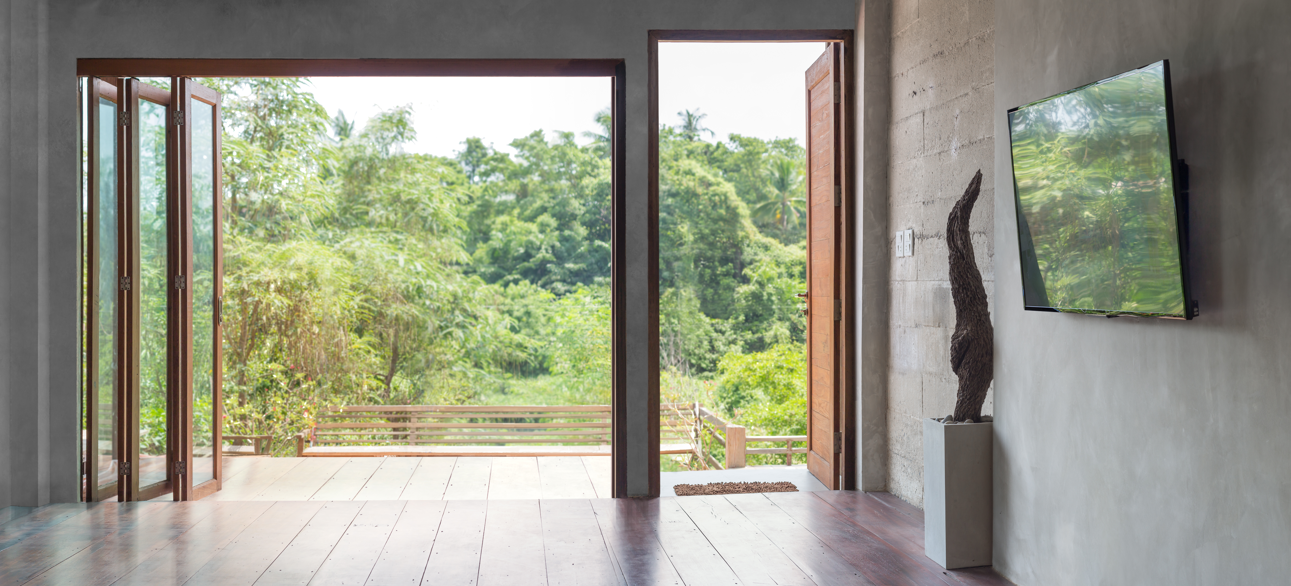
Most homes begin with walls. A room is drawn. A wall is placed. A window is added later. But some of the best homes begin with a different question.
What should this room look towards?
It could be a garden. A courtyard. A tree that already exists on the plot. A terrace. The morning sky. A distant city view. Once the answer is clear, the plan can begin to take shape around it.
This approach makes homes feel more personal. It also makes everyday spaces more enjoyable.
A View Is Part of the Interior
A good view changes the mood of a room.
It adds depth. It brings in changing light. It gives the eye a place to rest. It can make a plain interior feel complete without adding more furniture or decoration.
A home designed around views does not need every wall to be glass. It needs a few openings that are placed with intention.
A dining table facing a garden feels different from one facing a blank wall. A bedroom with French windows opening to a balcony feels more relaxed. A staircase looking towards a courtyard becomes an experience rather than a passage.
The best views are not always dramatic. A small private garden can be enough. The design must make it feel important.
Find the Best View First
Every plot has something worth framing.
It may be on the front side. It may be at the back. It may be above. In dense urban areas, the best view may be an internal courtyard rather than the street.
Architects often begin by mapping the site.
Where does the morning light come from? Which side has the best trees? What should be screened? Where is the neighbour’s wall? Which direction catches the breeze? These answers help decide where the living room, bedroom and terrace should sit.
The view should influence the layout.
A garden should be visible from the living room. A quiet corner may become a study. A private side can hold the bedrooms. The street-facing edge may use smaller windows, screens or service areas.
This is a more thoughtful way to plan a home than simply placing windows wherever there is leftover wall space.
French Windows Make the View Usable
French windows do more than bring in light.
They create a physical connection to the outside. Open the shutters and the room feels connected to the balcony, verandah or garden. Close them and the glass still holds the view.
French window models are available in many forms. Some have a classic divided-glass appearance. Others use large, clean panes with minimal aluminium profiles. They can be single or double shuttered. They can open inwards or outwards, depending on the space and design.
French windows design works especially well in:
- Bedrooms opening to balconies
- Living rooms leading to a verandah
- Dining spaces facing a courtyard
- Reading corners beside a small garden
- Homes with traditional, colonial or warm-modern architecture
The best French window is one that leads somewhere meaningful. A well-planted balcony is more valuable than an unused ledge.
Turn Outdoor Space Into a Room
A view becomes stronger when the outdoor area has a purpose.
A bare setback may not add much to the home. A planted courtyard can transform it. A small terrace with seating and shade can become an outdoor living room. A balcony with a chair, greenery and soft lighting can become a private retreat.
The inside and outside should work together.
Use similar tones across the flooring. Repeat a material or colour. Place indoor furniture so it faces the opening. Add outdoor seating at a similar scale. These simple moves make the two areas feel connected.
French windows design is particularly effective here because it creates a visible and usable threshold. The shutters can open wide during pleasant weather. The outdoor space becomes part of the home rather than an afterthought.
Frame the View Like Art
A window is a frame.
This is especially true with a fixed window. It can turn a garden, a tree or a changing sky into the focal point of a room. Unlike an opening window, it has no handles or moving shutters interrupting the glass.
Think about what sits within the frame.
A tall narrow fixed window can frame one mature tree. A wide horizontal opening can capture a garden. A corner window can reveal two directions at once. A high-level window can capture the sky while keeping the room private.
The frame should suit the subject.
A large panoramic view may need minimal aluminium framing. A smaller, more intimate garden may look beautiful through a French window with more detail. The design language should feel natural to the architecture.
Design the Inside Around the Opening
Once the view is selected, furniture planning becomes easier.
Do not place a television in front of the best window. Do not block a garden view with a tall cabinet. Do not put the dining table where everyone faces a wall while the best opening sits behind them.
Let the room acknowledge the view.
A living room sofa can face the garden. A reading chair can sit beside a French window. A bed can be positioned so the first view in the morning is the sky or trees, not a blank wall.
Lighting should also support the window. During the evening, use warm lamps and indirect lighting so the room does not become a bright box reflected in the glass.
Protect the View From Heat and Glare
A view is only valuable if you can enjoy it comfortably.
Large glass openings need shading. A west-facing garden view may be beautiful, but the room will need vertical fins, a screen, planting or external blinds. A south-facing opening may need a balcony slab or deep overhang.
This is where design becomes smarter than decoration.
Instead of covering the entire window with heavy curtains, use external shade that keeps the heat out while preserving the view. Use sheer curtains to soften daylight. Use blackout curtains only where complete darkness is needed.
The window should respond to the climate as well as the view.
Build Privacy Into the View
Not every view should be open to the public.
A bedroom may face a garden but still need privacy from a neighbouring terrace. A living room may look towards the street but need a buffer. Use planting, screens, low walls, textured glass or a change in window height to manage this.
A view can be carefully edited.
A low wall may hide parked cars while keeping the trees visible. A screen may block direct sightlines from a neighbour while letting the sky and light through. A tall planter may add greenery at eye level.
This creates privacy without turning the home inward.
Make the Architecture Feel Intentional
Homes designed around views often feel more expensive because they feel intentional.
The windows are not random. The room proportions make sense. The outdoor area has been considered. The furniture has a natural place. The home has a connection with its surroundings.
Window Magic can help bring this approach to life through aluminium windows and French window models that suit different architectural styles. The focus should always be the same: create openings that make people pause, look outside and feel glad to be at home.